Items | Special Two Days Tour To Luxor From Marsa Alam
Special Two Days Tour To Luxor From Marsa Alam
(1) Reviews
Al Qarna
Important Information
•
Wheelchair accessible
•
Infants and small children can ride in a pram or stroller
•
Service animals allowed
•
Infants are required to sit on an adult’s lap
•
Transportation options are wheelchair accessible
•
Not recommended for travelers with spinal injuries
•
Not recommended for pregnant travelers
Cancellation policy
For a full refund, cancel at least 24 hours before the scheduled departure time.
•
For a full refund, you must cancel at least 24 hours before the experience’s start time.
•
Cut-off times are based on the experience’s local time.
•
If you cancel less than 24 hours before the experience’s start time, the amount you paid will not be refunded.
•
This experience requires a minimum number of travelers. If it’s canceled because the minimum isn’t met, you’ll be offered a different date/experience or a full refund.
•
Any changes made less than 24 hours before the experience’s start time will not be accepted.
Become our Lokal Curator
Are you ready to turn your hobbies into a business?
Have you Visited Luxor and would you like to Discover More about Luxor? Enjoy a private 2-days tour to Luxor from Marsa Alam where you will visit Madinet Habu Temple, The Ramseum temple, Deir El Madina and the valley of the Queens then check in your hotel. Next day tour to Luxor Museum then we drive you back to Marsa Alam.
Highlights
2 days
Offered in Arabic (العربية) & 4 Others
Free Cancellation
Mobile Ticket
2 days
Offered in Arabic (العربية) & 4 Others
Free Cancellation
Mobile Ticket
What's Included
Lunch
Air-conditioned vehicle
tipping
Special Two Days Tour To Luxor From Marsa Alam
(1) Reviews
Al Qarna
About
Have you Visited Luxor and would you like to Discover More about Luxor? Enjoy a private 2-days tour to Luxor from Marsa Alam where you will visit Madinet Habu Temple, The Ramseum temple, Deir El Madina and the valley of the Queens then check in your hotel. Next day tour to Luxor Museum then we drive you back to Marsa Alam.
Highlights
2 days
Offered in Arabic (العربية) & 4 Others
Free Cancellation
Mobile Ticket
2 days
Offered in Arabic (العربية) & 4 Others
Free Cancellation
Mobile Ticket
What's Included
Lunch
Air-conditioned vehicle
tipping
Itinerary
Day 1
Day 2
Day 1: Marsa Alam- Luxor
3 Stops
1
Temple of Medinat Habu
Early morning, we will pick you up from your hotel in Marsa Alam by a private A.C. Car to be transferred to Luxor for an overnight trip to Luxor from Marsa Alam. Upon arrival you will meet your private tour guide who will join you to visit:
Madinat Habu temple :
In ancient times Madinat Habu was known as Djanet and according to ancient belief was the place was Amun first appeared. Both Hatshepsut and Tuthmosis III built a temple dedicated to Amun here and Later Rameses III constructed his larger memorial temple on the site.
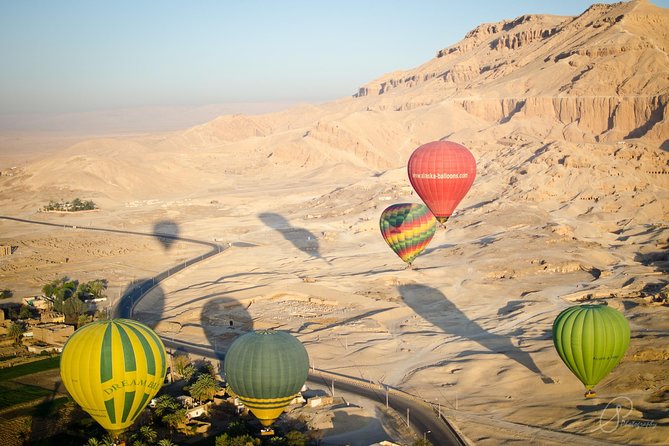
Madinat Habu temple from the air
2 hours
2
Luxor
Ramsseum:
Ramesseum, funerary temple of Ramses II (1279–13 BC), erected on the west bank of the Nile River at Thebes in Upper Egypt. The temple, famous for its 57-foot (17-meter) seated statue of Ramses II (of which only fragments are left), was dedicated to the god Amon and the deceased king. The walls of the Ramesseum, which is only about half preserved, are decorated with reliefs, including scenes depicting the Battle of Kadesh, the Syrian wars, and the Festival of Min
2 hours
3
Valley of the Artisans (Deir el-Medina)
Deir El Madina
The main cemetery of the royal workmen at Deir el-Medina is situated to the west of the village, on the slope of the Theban hills. Most of the tombs were built during the 19th dynasty. Some of them are impressive in their decoration and size. By the time of the 20th dynasty, the tombs had been turned into family tombs in which the descendants of the original owners were buried. Little alterations were made apart from the addition of another subterranean burial chamber. The lower courses of the eastern hill of Qurnet Murai were the site of burials of babies and children. More than a hundred children were buried in common domestic pottery jars or amphorae, in baskets, even fish baskets, in chests, boxes or in proper coffins there. The poorest burials were those of still-born babies. They contained no jewelry or amulets, only small vessels filled with food for the afterlife. The adults' graves were situated higher up.
Lunch During the tour.