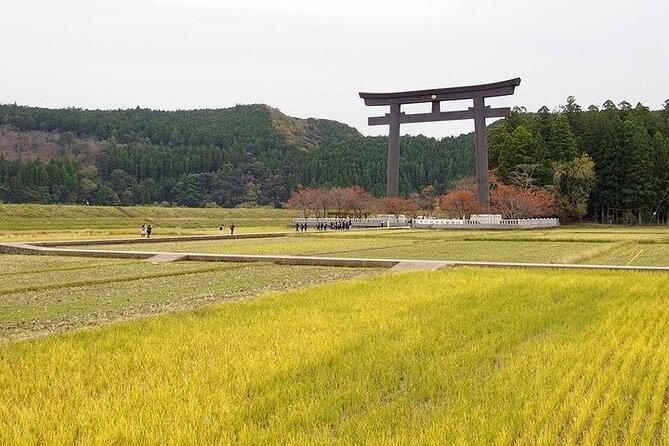
Deep within the forested mountains of the Kii Peninsula lies the Kumano Kodo, one of only two pilgrimage routes in the world designated as a UNESCO World Heritage site. For over a millennium, people from all levels of society—from emperors to commoners—have made the arduous journey to these sacred grounds in search of spiritual rebirth.
This meticulously planned 2-day tour offers a seamless, hassle-free way to experience the highlights of this ancient trail, complete with professional English-speaking guidance, comfortable transportation, and authentic local stays.
If you have a JR Pass, please select "People who have JR Pass". If not, please select "People who don't have JR Pass".
Points forts
2 jours
Proposé en Anglais
Non remboursable
Billet mobile
2 jours
Proposé en Anglais
Non remboursable
Billet mobile
Ce qui est inclus
1night Hotel
Roudtrip cost ( Train ) from Osaka
Guide parlant anglais
Dinner
Breakfast
Déjeuner
Itinéraire
Day 1
Day 2
Kumanokodo Walking (Kurisugawa ⇒ Gyuba Douji )
4 Stops
1
Kii-Tanabe Station
Meet with your guide at Kii-Tanabe Station
2
Kumano Kodokan
Daimon Oji
There used to be a torii gate from Kumano Hongu Grand Shrine at this site. The name Daimon comes from the"big gate"of Kumano Hongu Grand Shrine. Dai means"big"and mon means"gate". There are other Daimon gate in the Kumano region.Koyasan's Daimon is a huge gate with guardian dieties. Daimon-zaka is a long slope leading up to the Nachi Grand Shrine gates. This oji is not as old as other ojis built in the Heian era. There seemed to have been shrine buildings at one time,but by the middle of the Edo era(1603-1868),all the buildings were gone. The curerent building was rebuilt in 1989. Beyond the building a small pagoda and a greenish-color stone monument are seen. This monument was built bu Kishu Domain which has become the present day Wakayama prefectural government.
1 heure
3
Harijizo-son Shrine
For generations, it has been cherished by locals and pilgrims alike as a guardian that watches over the safety and well-being of travelers walking the long pilgrimage route.
4
Takahara Kumano Shrine
This shrine is the oldest existing shrine along the Kumano Kodo in the Nakahechi area. The deity of this shrine is said to have been transferred from Kumano Hongu Grand Shrine. The first recorded reference to this shrine occurred in 1109. The name of this shrine is seen in Kumano Gokoki, a travel journal written by Fujiwara Teika. According to his journal, he visited this shrine. The shrine is sometimes referred to as Takahara Oji although it is not an oji. The main building was built in the Kasuga Taisha shrine style in 1544. It is a beautiful vermilion color building with a cypress bark roof.
There are several giant, old camphor trees on the shrine grounds.
Takahara has been written about by poets through the ages. The area around Takahara holds beautiful views in all seasons. A local pageantry with people dressed in period costumes of a thousand years ago is held every year on November 3.
Deep within the forested mountains of the Kii Peninsula lies the Kumano Kodo, one of only two pilgrimage routes in the world designated as a UNESCO World Heritage site. For over a millennium, people from all levels of society—from emperors to commoners—have made the arduous journey to these sacred grounds in search of spiritual rebirth.
This meticulously planned 2-day tour offers a seamless, hassle-free way to experience the highlights of this ancient trail, complete with professional English-speaking guidance, comfortable transportation, and authentic local stays.
If you have a JR Pass, please select "People who have JR Pass". If not, please select "People who don't have JR Pass".