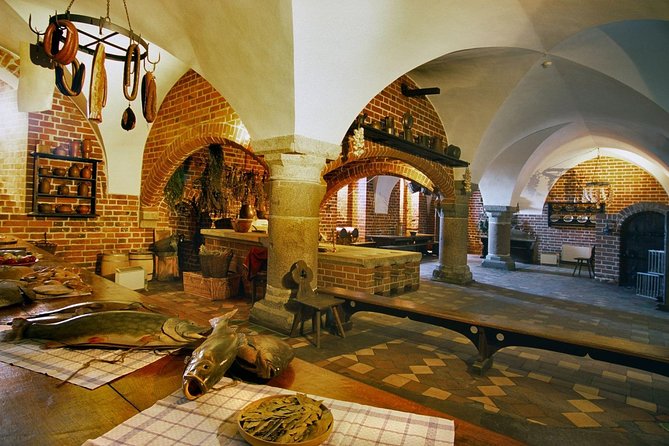
During the tour you will visit Malbork Castle and the Stutthof concentration camp. When visiting Malbork Castle, you will have free time for lunch in a cafe/restaurant located on the castle grounds.
Highlights
7 hours
Offered in English
Non-refundable
Mobile Ticket
7 hours
Offered in English
Non-refundable
Mobile Ticket
What's Included
Admission to Stutthof Concentration camp
Pick-up/Drop-off at the port by comfortable a/c vehicle relevant to the group size
Professional English-speaking tour guide for 7 hrs
Admission to Malbork Castle
Tips/Gratuity
Other admissions/donations
Lunch
Full-Day Private Guided Tour to Stutthof Concentration Camp and Malbork Castle
Malbork
About
During the tour you will visit Malbork Castle and the Stutthof concentration camp. When visiting Malbork Castle, you will have free time for lunch in a cafe/restaurant located on the castle grounds.
Highlights
7 hours
Offered in English
Non-refundable
Mobile Ticket
7 hours
Offered in English
Non-refundable
Mobile Ticket
What's Included
Admission to Stutthof Concentration camp
Pick-up/Drop-off at the port by comfortable a/c vehicle relevant to the group size
Professional English-speaking tour guide for 7 hrs
Admission to Malbork Castle
Tips/Gratuity
Other admissions/donations
Lunch
Itinerary
1
Malbork Castle
The Castle of the Teutonic Order in Malbork, located in the Polish town of Malbork, is the largest castle in the world measured by land area. It was originally built by the Teutonic Knights, a German Roman Catholic religious order of crusaders, in a form of an Ordensburg fortress. In 1466, both castle and town became part of Royal Prussia, a province of Poland.
3 hours and 30 minutes
2
Stutthof Concentration Camp
Stutthof was a Nazi German concentration camp built in a secluded, wet, and wooded area near the small town of Sztutowo 34 km (21 mi) east of the city of Gdańsk in the former territory of the Free City of Danzig. The camp was set up around already existing structures after the invasion of Poland in World War II, used for the imprisonment of Polish intelligentsia. More than 85,000 victims died in the camp out of as many as 110,000 inmates deported there.